
Loft Conversions · Balham
— Balham · Heaver Estate · Hyde Farm · SW12 & SW17
Loft conversions in Balham.
Balham has two councils, five conservation areas, one Article 4 direction that bans a Velux, and a housing estate that isn’t houses. Which of those applies to your street decides everything — so this page starts there.
Loft conversions in Balham are the job that turns a three-bedroom Victorian terrace into the four-bedroom house the same family would otherwise move for. Rightmove’s figures for the twelve months to April 2026 put the average three-bed sale in Balham at around £758,000 and the average four-bed at around £1,329,000 — a gap of roughly £570,000 that a well-built loft closes for a fraction of it. We are LMDEC, a family-run building firm founded by Lukasz Mazurek in 2014, and the Victorian terraces of SW12 are where we do most of our loft work. Balham is a short drive from our South Croydon base and we are on Balham sites every week.
— Is your home right?
Is your Balham house right for a loft conversion?
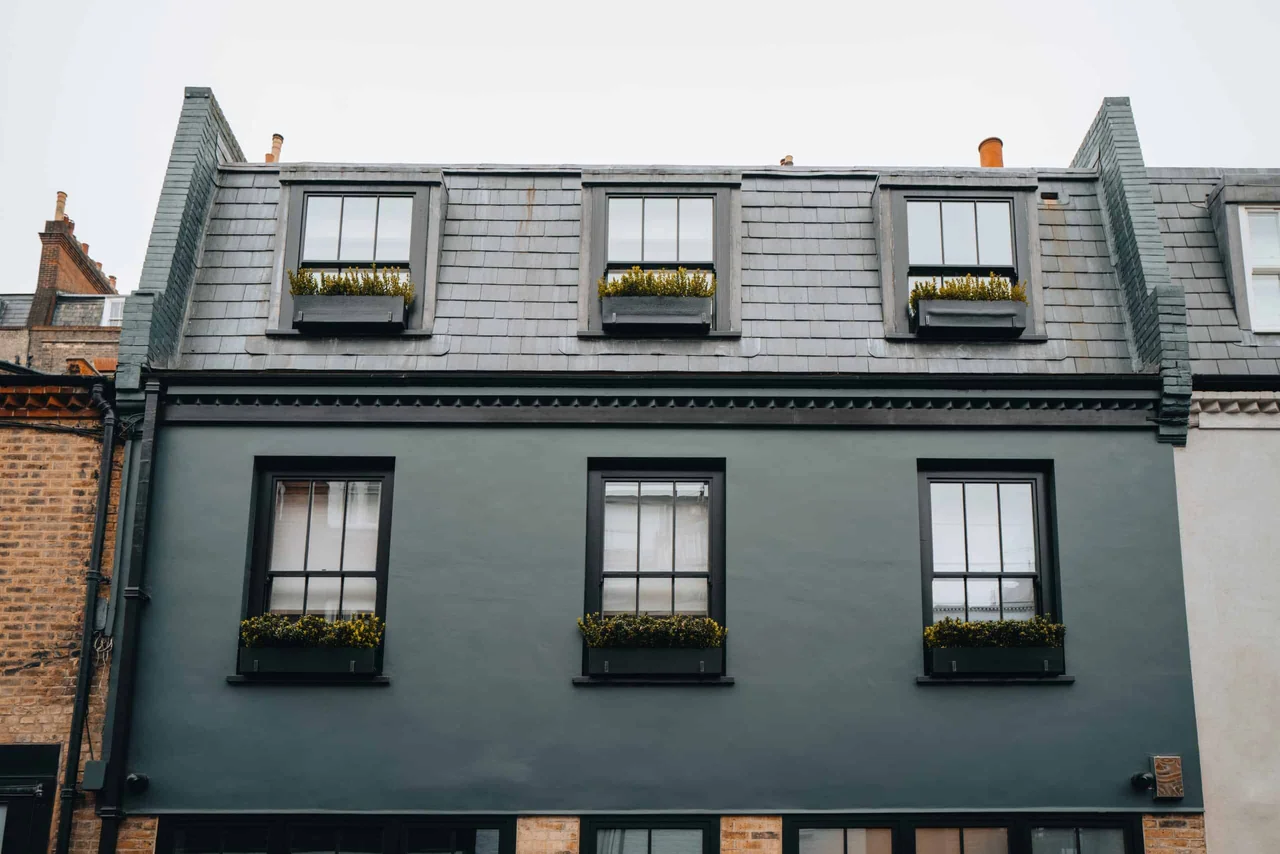
Most of Balham went up between 1880 and 1910, and most of it is a two-storey Victorian or Edwardian terrace with a two-storey rear addition — the “outrigger” that holds the kitchen and back bedroom. That shape is the reason the L-shaped dormer exists: the main roof and the outrigger roof are converted together into one floor, and a terrace that started with three bedrooms ends with four and a bathroom. Ridge heights on these houses are usually generous; the stair is the constraint, and on a Balham terrace it nearly always lands over the existing one without taking a bedroom.
The Heaver Estate — the red-brick Queen Anne streets between Balham High Road and Tooting Bec Common, built by Alfred Heaver from about 1890 in the grounds of Bedford Hill House — is the exception in size: bigger houses, taller roofs, carved brick and stained glass, and a conservation area with an Article 4 direction that covers dormers front and rear. And there is a third type most builders do not spot until the survey: the Tyneside flats of Hyde Farm, which look like terraced houses from the street and are actually two flats behind two front doors. More on both below, because they change the price and the paperwork.
One Balham-specific check we make on every first visit: the council’s own appraisal records that the post-war years brought “widespread conversion into flats, often involving insensitive internal and external changes”. If your house was once flats and has been knocked back into one, or carries an old roof extension, that earlier work counts against your permitted development allowance today. We look for it before we quote.
— What we build
Types of loft conversion we build in SW12.
L-shaped rear dormer
The Balham classic. A dormer over the main roof and a second over the rear addition, joined into one L-shaped floor — typically a double bedroom, a bathroom and often a small study or a second bedroom. It is the biggest space you can add without a mansard, and because it nearly always exceeds the 40 cubic metre allowance on a terrace, it goes through as a householder planning application to Wandsworth. See our loft conversion and extension services for the full scope.
Set-back rear dormer
A single flat-roofed dormer on the main rear slope, set down from the ridge and in from the party walls. Inside the Heaver Estate or Nightingale Lane conservation areas this is the design that gets approved; outside them it is usually permitted development.
Rooflight conversion
Conservation-pattern Velux windows in the existing slopes, no change to the roof shape. The cheapest loft in Balham and the one the conservation officers like best — with one exception, Hyde Farm, where a rooflight needs an application to Lambeth. Explained below.
Mansard
Near-vertical rear wall, the most floor area a terrace can hold. Needs a full application anywhere in Balham and, in a conservation area, precedent on the street. We will tell you on the first visit whether your terrace has it.
— Costs
Loft conversion costs in Balham.
Honest 2026 ranges from recent Balham, Tooting and Wandsworth projects. Balham prices at the inner South London level: permit-bay parking suspensions, skip licences, a two-metre side alley instead of a drive, and conservation-area materials on the Heaver Estate. Your figure depends on the roof, the finish and whether you add a bathroom.
| Conversion type | Range (2026) | Timeline on site |
|---|---|---|
| Rooflight / Velux | £45,000 – £65,000 | 5-7 weeks |
| Set-back rear dormer | £60,000 – £85,000 | 7-9 weeks |
| L-shaped rear dormer | £75,000 – £110,000 | 9-12 weeks |
| Mansard | £95,000+ | 10-14 weeks |
Prices exclude VAT, architect, structural engineer, party wall and council fees. Fixed price in writing, itemised by trade, with a 10% contingency shown separately — before any work starts.
Add: the Wandsworth householder application fee (£548 at the time of writing) or a Lawful Development Certificate, a structural engineer (£600–£1,200), building control, and a party wall surveyor — on a Balham terrace you have two neighbours, so budget for two notices. → Full pricing guide for South London renovations · 2026 construction cost estimator
— Planning in Balham
Planning permission for a loft conversion in Balham: four different answers.
There is no single answer for Balham, because Balham is not one planning jurisdiction. Depending on your street you are in one of four situations, and the difference between them is the difference between no application at all and a Velux that needs consent.
| Where you are | Who decides | What a loft needs |
|---|---|---|
| Most of SW12 — outside any conservation area | Wandsworth | Rear dormer within 40 m³ (terrace) or 50 m³ (semi) is permitted development; L-shaped usually exceeds it → householder application. Get a Lawful Development Certificate either way. |
| Heaver Estate CA (Bedford Hill, Ritherdon Rd, Elmbourne Rd…) | Wandsworth | Conservation area removes dormer PD; Article 4 (1996) also covers dormers “whether at the front, or at the rear”, re-roofing in different materials and external painting → full application, materials matched. |
| Nightingale Lane, Old Devonshire Rd, Dinsmore Rd CAs | Wandsworth | No Article 4, but conservation area status removes dormer PD → full application; rooflights stay permitted development. |
| Hyde Farm estate (Telferscot, Midmoor, Cambray, Emmanuel Rd…) | Lambeth | Conservation area + Lambeth Article 4 → full application for a dormer and for a rooflight. If the property is a Tyneside flat, householder PD does not apply at all. |
Checked against Wandsworth and Lambeth conservation area appraisals and the GPDO 2015. Confirm your own address with the council before committing to a design.
The rule every builder’s website gets backwards
You will read that “if you are in an Article 4 area you need planning permission for a dormer”. That is not how it works. Under Schedule 2, Part 1, Class B of the General Permitted Development Order, roof enlargements are excluded on “article 2(3) land” — and every conservation area is article 2(3) land. So inside any Balham conservation area, a dormer needs a full application whether or not there is an Article 4 direction. What the Article 4 adds is control over the things Class B never covered: rooflights, windows and doors, re-roofing, painting the brickwork, porches, front gardens. On the Heaver Estate and at Hyde Farm those extras are what catch people out.
Which Balham streets are in a conservation area
Wandsworth has 46 conservation areas; these are the ones that reach into Balham, with the streets the appraisals name. Boundaries run down the middle of some roads, so a house number matters.
| Conservation area | Designated | Streets (from the appraisal) | Article 4? |
|---|---|---|---|
| Heaver Estate | 19 Sept 1978; extended 1986, 1989 | Balham High Road (part), Bedford Hill, Bushnell Road, Drakefield Road, Dr Johnson Avenue, Elmbourne Road, Hillbury Road, Huron Road, Louisville Road, Manville Road, Ritherdon Road, Streathbourne Road, Terrapin Road, Veronica Road | Yes (1996) — dormers front and rear, re-roofing, painting, windows, porches, front gardens |
| Nightingale Lane | Sept 1970; extended 1979, 1989, 2004 | Nightingale Lane and the roads off it towards Wandsworth Common — the area estate agents call the “Nightingale Triangle”, which is not a planning designation | No — but the appraisal says any roof extension needs permission |
| Old Devonshire Road | July 1995 | Old Devonshire Road (Nos 6 and 8 are Grade II listed) | No |
| Dinsmore Road | 1989 | Dinsmore Road | No |
| Hyde Farm (Lambeth CA48) | 13 Feb 1996; boundary revised Oct 2015 | Telferscot Road, Midmoor Road, Cambray Road, Glenfield Road, Haverhill Road, Radbourne Road, Burnbury Road, Fieldhouse Road, Emmanuel Road | Yes (Lambeth) — includes rooflights, windows, doors, re-roofing, render, porches, extensions |
Ritherdon Road and Bedford Hill are not separate conservation areas; they sit inside the Heaver Estate CA. Around a quarter of SW12 postcodes are in Lambeth, not Wandsworth.
Hyde Farm: Lambeth, not Wandsworth — and flats, not houses
The most repeated “Balham planning fact” online is that Hyde Farm has an Article 4 direction, and almost every site files it under Wandsworth. It is Lambeth Conservation Area 48, and a Hyde Farm application goes to Lambeth, on Lambeth’s portal, against Lambeth’s policies and fee. The estate was built by Emmanuel College, Cambridge, between 1896 and 1916, and most of it is Tyneside flats — two flats stacked behind what looks like one terraced house, usually with two front doors side by side. That changes a loft in three ways: householder permitted development does not apply to a flat at all, the upper flat needs the freeholder’s consent and often a lease variation, and the party wall runs horizontally as well as vertically. Lambeth’s current Article 4 direction (made in 2015–16, replacing one from 2002) removes permitted development for rooflights among much else — so the cheapest loft option in the rest of Balham, the Velux conversion, needs a full application on Telferscot or Cambray Road.
What Wandsworth actually approves
Wandsworth decided 454 loft-conversion applications in the twelve months to spring 2026 and approved 403 of them — an 89% approval rate, typically in eight weeks. Across all householder applications the borough approves 92%. The two reasons lofts fail are the 45-degree daylight test to the neighbour’s rear window and a design that ignores “the established brick, mortar or roofline of the terrace”. The policy your application is judged against is DMH5 of the Housing SPD: roof extensions “confined to the rear of the building” and, where visible from the street, “sympathetic to the style of the building, not visually intrusive”. Design to that and a Balham loft is a routine approval; ignore it and you are in the 11%.
Party walls and Building Regulations
Every Balham terrace shares two walls, so the Party Wall etc. Act 1996 applies twice: notice to each neighbour at least two months before the steels go in, fourteen days for them to respond, and a surveyor (or one agreed surveyor for both sides) where they dissent. Building Regulations apply whether or not planning does — new floor joists and steels from a structural engineer, a protected stairway with FD30 doors because a loft makes the house three storeys, 30 minutes’ fire resistance to the floor, interlinked alarms, Part L insulation. Our loft conversion regulations guide has the numbers, including the ten-year enforcement rule that replaced the four-year rule in April 2024.
— Why LMDEC
Why Balham homeowners choose us.
We know which council you are in before you do. Lukasz Mazurek founded the firm as a sole trader in 2014 and incorporated LMDEC LTD in 2018 (Companies House #11635394); the Victorian terraces of Balham, Tooting and Wandsworth are our core work, and the appraisals above are documents we have read, not links we have pasted.
The people who quote your loft are the people who build it. One in-house team, one site manager from first day to handover. Gas work by Gas Safe registered subcontractors, electrics by NICEIC certified subcontractors; registration numbers on request before work starts.
£2 million Public Liability insurance, two-year workmanship warranty, six-month return visit included. A separate ten-year guarantee covers tanked floors and wet rooms, so a loft bathroom is covered for a decade. Over fifty verified five-star reviews on Google, Trustindex and Yell — read what our clients say — and a Best of Houzz 2026 award.
— Stay in the loop
Follow your Balham loft from work.
Most of the structure goes in from the scaffold while you are at the office. Every LMDEC project includes our private Client Portal: a live schedule, progress photos straight from site, all your drawings and consents, and one-click sign-off on any variation, in one secure login — no app to install. See how the Client Portal works →
— Common questions
Balham loft conversions — common questions.
Do I need planning permission for a loft conversion in Balham?
It depends on your street. Outside a conservation area, a rear dormer within 40 cubic metres on a terrace (50 on a semi) is permitted development; an L-shaped dormer usually exceeds that and needs a householder application to Wandsworth. Inside the Heaver Estate, Nightingale Lane, Old Devonshire Road or Dinsmore Road conservation areas every dormer needs a full application, because conservation areas remove Class B roof rights on their own. On the Hyde Farm estate the application goes to Lambeth, and even a rooflight needs consent. We check the exact address before we draw anything.
Which streets in Balham are in a conservation area?
Heaver Estate: Bedford Hill, Ritherdon Road, Elmbourne Road, Drakefield Road, Hillbury Road, Huron Road, Louisville Road, Manville Road, Streathbourne Road, Terrapin Road, Veronica Road, Bushnell Road, Dr Johnson Avenue and part of Balham High Road. Nightingale Lane and the roads off it. Old Devonshire Road. Dinsmore Road. And in Lambeth, the Hyde Farm estate: Telferscot, Midmoor, Cambray, Glenfield, Haverhill, Radbourne, Burnbury, Fieldhouse and Emmanuel Roads. Boundaries can split a road, so check the house number against the council map.
Is my Balham house in Wandsworth or Lambeth?
Most of Balham is Wandsworth, but roughly a quarter of SW12 postcodes are in Lambeth — the Hyde Farm estate and the streets towards Clapham Park. It matters: a different planning portal, a different validation checklist, a different fee and a different conservation policy. If your road is Telferscot, Midmoor, Cambray, Glenfield, Haverhill, Radbourne, Burnbury, Fieldhouse or Emmanuel Road, you apply to Lambeth.
Can I put a rooflight in without planning permission in Balham?
In most of SW12, yes — rooflights fall under Class C, which stays permitted development even inside a conservation area, provided they do not project more than 150 mm above the roof plane. The exceptions are the Heaver Estate and Hyde Farm, where the Article 4 directions specifically remove that right, so a Velux needs an application to Wandsworth or Lambeth respectively.
Why do Balham loft conversions get refused?
Rarely, if designed properly: Wandsworth approved 403 of 454 loft applications in the twelve months to spring 2026. The refusals fail on the 45-degree daylight test to a neighbour’s rear window, or on a dormer that ignores the brick, mortar and roofline of the terrace. Wandsworth’s Housing SPD policy DMH5 asks for roof extensions confined to the rear and, where visible from the street, sympathetic and not visually intrusive.
How much does a loft conversion cost in Balham in 2026?
As a guide: a rooflight conversion £45,000 to £65,000, a set-back rear dormer £60,000 to £85,000, an L-shaped rear dormer £75,000 to £110,000 and a mansard from £95,000, excluding VAT and professional fees. Balham prices at inner South London levels because of parking suspensions, alley access and conservation-area materials. We confirm a fixed written price, itemised by trade, before any work begins.
Part of our loft conversions across South London — the borough-wide picture is in our Wandsworth loft conversion guide; nearby Clapham · Streatham · Wimbledon. Renovating the whole house? See house renovation in Balham and Wandsworth.
— Which of the four are you in?
Thinking about a loft conversion in Balham?
Send us your postcode and we will tell you which council, which conservation area and which Article 4 direction apply — then book a free design visit and get a fixed written price within 48 hours.