
— Cost guide · London · 2026
2026 construction costs in London — full guide and estimates.
Honest 2026 cost ranges for refurbishments, extensions, kitchens and bathrooms across London. Real numbers from real projects — no inflated estimates, no hidden extras.
How much does construction cost in London in 2026? The honest answer depends on the project type, finish level, and location. A standard new build in 2026 sits at £2,600-£3,500 per square metre. Premium custom builds £3,500-£4,200+ per m². Renovations — what most homeowners need — range from £6,000 for a compact bathroom refresh to £500,000+ for a luxury full house transformation in Wimbledon Village or Royal Borough of Kensington and Chelsea. London construction costs in 2026 remain among the highest in the world, with property renovation costs in London running 20-30% above UK averages.
London construction in 2026 is settling after several volatile years. BCIS forecasts building costs to rise around 14% over the next five years, with tender prices up 15%. Total new work output grew just 1.8% in 2025, with BCIS expecting subdued growth through 2026 as residential and commercial sectors continue to struggle. For homeowners planning a renovation, this means slightly steadier pricing than 2022-2024, but still meaningful annual creep — and a continued shortage of skilled trades that pushes labour costs up.
London remains one of the most expensive cities in the world to build in. Premium of 20-30% over the UK average is normal. Heritage stock, conservation areas, tight access, and stricter Part L and Part F building regulations all play a part. This guide breaks down what specific projects cost in 2026 — based on real LMDEC quotes across Croydon, Wandsworth, Kensington & Chelsea, Wimbledon, Beckenham and surrounding areas.
— What’s driving 2026 prices
What’s pushing London construction costs in 2026.
Inflation and economic recovery
UK inflation is running 2.2-2.5% through early 2026. BCIS forecasts building costs to rise 14% over the next five years (roughly 2.7% per year). Bank of England base rate cuts to 3.75% (November 2025) are starting to ease financing for home renovations, with further cuts expected through 2026.
Location premium
London prices run 20-30% above UK averages. High wages, tight access for skips and deliveries, narrow street parking, party wall complexity and council planning fees all contribute. Royal Borough of Kensington and Chelsea and central Wandsworth typically sit at the top of London pricing. Croydon, Bromley and outer South London boroughs sit 10-15% below central but still well above national averages.
Labour shortage
£2 million Public Liability insurance, two-year workmanship warranty, six-month return visit included. All gas work carried out by individually qualified Gas Safe registered subcontractors; all electrical work by individually qualified NICEIC certified subcontractors. Registration numbers available on request for verification before work starts. Forty-three verified five-star reviews on Google, Trustindex and Yell.
Materials
Steel, timber, cement and aggregates prices have settled compared to 2022-2023, but remain 15-20% above 2020 levels. Low-carbon alternatives required by stricter building regs typically add 5-10% to material costs. Energy-intensive materials (cement, steel, ceramics) remain exposed to gas price fluctuations.
Building regulations and energy standards
Part L (energy efficiency) and Part F (ventilation) tightened in 2022, with the Future Homes Standard coming in 2025-2026. Higher insulation specifications, MVHR systems, and lower-carbon heating add upfront cost but reduce running costs over the building’s lifetime.
Project complexity and site conditions
Bespoke joinery, awkward access, listed buildings, party wall constraints, basement excavation, conservation area applications — these add 10-25% to standard pricing. Victorian terraces in Richmond or Wimbledon Village with narrow side returns are more expensive per square metre than a 1930s detached in Beckenham simply because access slows everything down.
— Cost per m²
London construction costs per square metre in 2026.
Mid-range finish levels. VAT and contingency (10-15%) added separately. Central London Royal Borough projects typically sit at the top of these ranges; outer boroughs 10-15% lower.
| Project type | Range per m² | Average | Notes |
|---|---|---|---|
| Standard new house | £2,600 – £3,500 | £3,000 | Mid-range spec |
| Premium custom build | £3,500 – £4,200+ | £3,850 | Bespoke materials and finishes |
| Single-storey extension | £2,000 – £2,800 | £2,400 | Kitchen-diner or living space |
| Two-storey extension | £1,800 – £2,400 | £2,100 | Better value per m² |
| Loft conversion (dormer) | £1,400 – £2,200 | £1,800 | With proper insulation |
| Basement excavation | £3,000 – £4,500+ | £3,750 | Underpinning and tanking included |
All prices exclude VAT, architect fees, structural engineer fees, party wall surveyor, council fees. Add 10-15% contingency for unforeseen findings (hidden damp, asbestos, rotten joists, failed wiring).
Why does London construction cost more than the rest of the UK? The average construction cost per square metre in London is 20-30% higher than the UK average. This premium reflects high wages for skilled trades, tight urban access for materials and waste, more complex party wall and conservation area requirements, higher council planning fees, and the sheer density of work bidding for available trades. Outer South London boroughs (Croydon, Bromley, Beckenham) typically sit 10-15% below central London pricing. Royal Borough of Kensington and Chelsea, Westminster, and prime Wandsworth (Battersea, Clapham, Wimbledon Village) sit at the top.
Is 2026 a good year to renovate in London? Yes, conditions in 2026 are notably steadier than 2022-2024. BCIS forecasts subdued growth with cost increases of 2-3% annually rather than the 8-12% spikes seen during 2022. Bank of England base rate cuts to 3.75% (with further cuts expected through 2026) ease project financing. Material prices have stabilised. The labour shortage remains real but is gradually improving. For homeowners planning a kitchen, bathroom, loft, extension or full house refurbishment in London, 2026 offers more pricing predictability than recent years.
— Renovation costs by project
Home renovation costs in London for 2026.
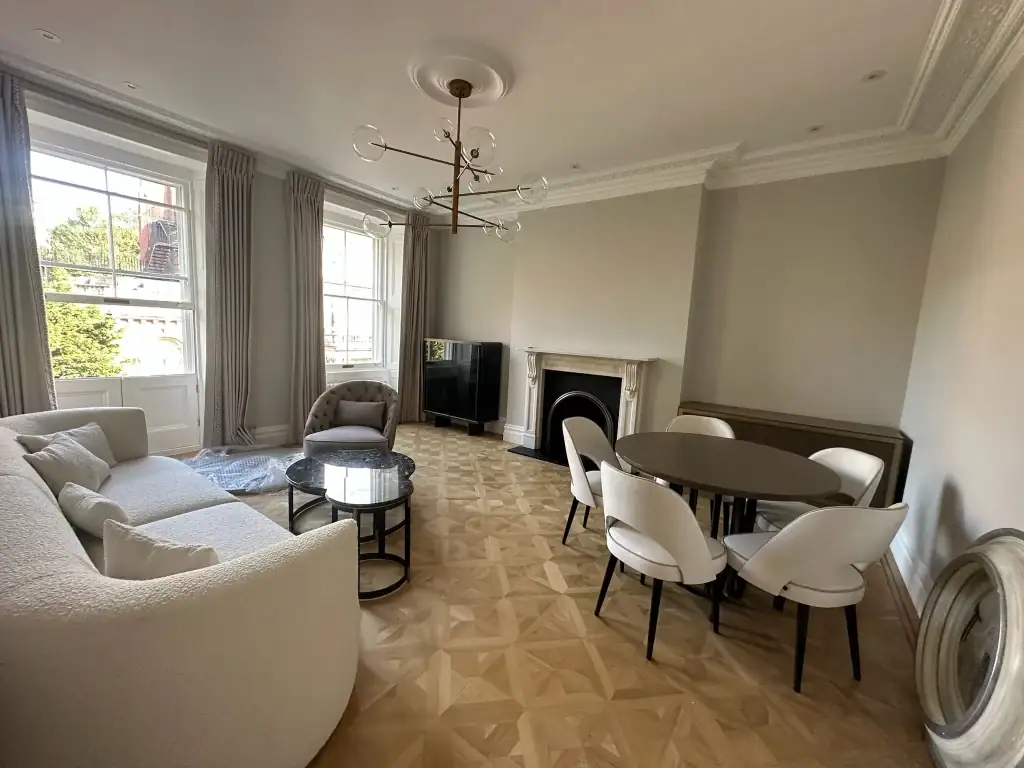
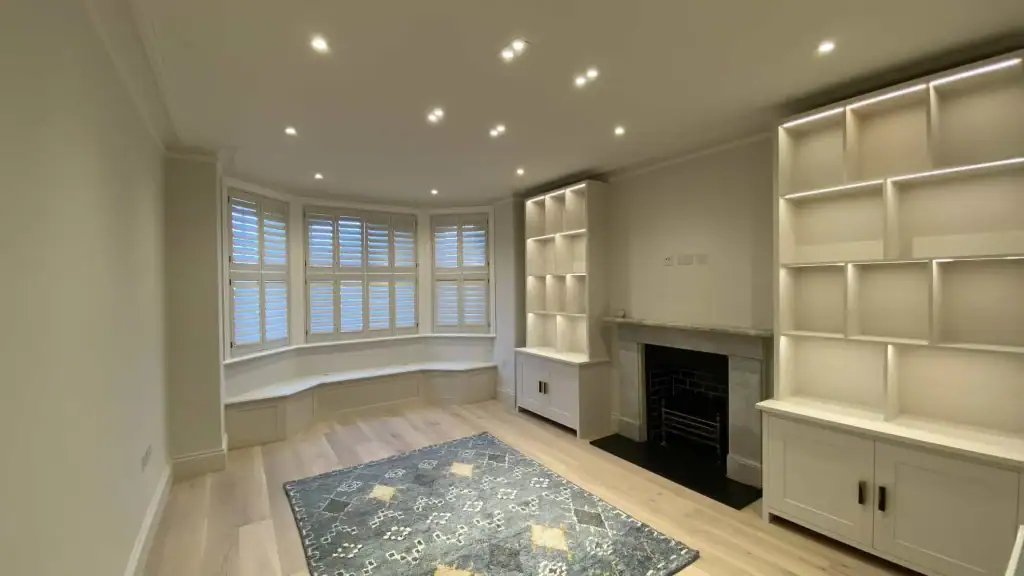
London renovation prices run 30-40% above UK averages. The ranges below reflect what LMDEC quotes typically come in at across South London — from buy-to-let landlords in Croydon doing sensible upgrades, to luxury Victorian villa refurbishments in Wimbledon Village and Chelsea.
Kitchen renovation · £15,000 – £60,000+
Mid-range new kitchen with shaker cabinetry, integrated appliances, quartz worktops and tiling typically £20-30k. Bespoke shaker or handleless with island and premium German cabinetry sits at £35-50k. Luxury kitchens with custom joinery, premium German brands (Bulthaup, Poggenpohl) and high-end appliances run £60k+. See our kitchen renovation gallery.
Bathroom renovation · £6,000 – £25,000+
Compact bathroom refresh £6-10k. Standard family bathroom with new layout, premium tiling, underfloor heating £10-18k. Luxury wet rooms with marble, frameless glass, designer fittings £18-35k+. All LMDEC bathrooms come with a 10-year waterproofing guarantee. See bathroom renovation projects.
Loft conversion · £55,000 – £110,000
Standard rear dormer loft conversion with one bedroom and ensuite £55-75k. Hip-to-gable dormer in 1930s semi £70-90k. Mansard or L-shape dormer £85-110k. Most fall under permitted development with Lawful Development Certificate. See loft conversion services.
Single-storey extension · £40,000 – £160,000
20m² rear kitchen-diner extension £40-75k (terrace) or £70-100k (semi with wrap-around). Larger 30-40m² extensions with bi-fold doors, structural steel, roof lantern £100-160k. Add £15-30k if a new kitchen is included. See extension services.
Full house refurbishment · £80,000 – £500,000+
Compact 2-3 bedroom terrace refurb £80-150k. Standard 3-4 bedroom family home £150-250k. Luxury 4-5 bedroom Victorian villa refurbishment with extension and loft £250-500k+. Includes rewire (£3,500-£12,000), replumb and new heating (£6,000-£28,000), full replaster and decoration. See full property refurbishment service.
Add-ons
New windows for a 3-bed house £8,000-£25,000 (depending on timber sash vs uPVC vs aluminium). New roof £8,000-£25,000+. Boiler replacement £3,500-£6,500. Heat pump installation £8,000-£15,000 (with possible BUS grant). External rendering or insulation £6,000-£18,000.

— What’s ahead
What’s coming through 2026 and beyond.
BCIS expects subdued growth through 2026 with cost increases of 2-3% annually as labour and energy costs continue to creep. Bank of England base rate cuts (currently 3.75%) should continue easing financing for home renovations. Repair, maintenance and improvement (RMI) work — what LMDEC mostly does — typically holds up better than new-build during periods of subdued growth, as homeowners choose to upgrade rather than move.
The Future Homes Standard is bringing tighter energy efficiency requirements that affect new extensions and heating system replacements. Heat pumps are becoming more common in detached and semi-detached refurbishments thanks to the Boiler Upgrade Scheme grant (£7,500 in 2026 for air source heat pumps in England). Modular construction is gaining ground for new-build but remains uncommon for typical London refurbishment work.
— Keeping costs sensible
Six ways to keep your renovation costs sensible.
1. Plan with 10-15% contingency
Roughly one in three London refurbishments uncovers something the survey didn’t catch — rotten joists, hidden damp, asbestos, failed waste pipes, decommissioned electrical work. A 10-15% contingency saves the project from stalling halfway through.
2. Use local builders who know the borough
Builders working regularly in your borough know the council’s planning quirks, conservation rules, party wall requirements and material supply chains. This translates to faster approvals, fewer planning rejections, and sharper quotes. LMDEC works extensively across Croydon, Wandsworth, Wimbledon, Kensington & Chelsea, Richmond, Bromley and Beckenham — we know each borough’s planning officers and processes.
3. Choose materials strategically
UK-manufactured kitchens, bathrooms and joinery often beat European imports on lead times and post-purchase support. Engineered oak flooring (rather than solid) costs less, lays better over underfloor heating, and looks identical. Spec where it matters (kitchens, bathrooms, where you touch the surface daily) — save on what’s behind plaster.
4. Time your project
Quieter periods (typically January-February for non-extension work) can mean better availability of trades and slightly more competitive quotes. Avoid starting structural work in November-December — short days, weather, and Christmas shutdowns slow everything down.
5. Lock in fixed-price contracts
Fixed-price quotes with itemised variations protect against mid-project inflation. Plain English contracts with JCT-style milestone payments — common LMDEC practice — make scope changes transparent and prevent “surprise” invoices at the end.
6. Prioritise high-return work
Kitchen and bathroom renovations typically return strong value at resale across South London. Extensions adding usable square footage (kitchen-diner, garden room) often return full cost in higher-value boroughs. Loft conversions adding a bedroom and ensuite reliably increase property value. Cosmetic redecoration alone — less so. Spend where it adds floor area or significantly upgrades the most-used rooms.
— Wrapping up
London renovation costs in 2026 — final thoughts.
2026 is shaping up as a steadier year than 2022-2024 for London renovation pricing — costs creeping but not spiking, financing easing as the Bank of England cuts rates, and labour availability slowly improving. For homeowners in Wandsworth, Wimbledon, Kensington & Chelsea, Richmond, Croydon, Bromley or Beckenham planning a refurbishment, this is a reasonable year to get started. Costs aren’t dropping — but neither are they running away.
LMDEC specialises in custom refurbishments across South London — full house transformations, kitchen and bathroom installations, extensions, lofts, electrical and heating. Two decades of experience, all trades in-house, fixed-price quotes within 48 hours of a site visit, and a two-year workmanship warranty on everything we build.
— Common questions
2026 London construction cost FAQ.
How much does a kitchen renovation cost in London in 2026?
A typical kitchen renovation in London in 2026 costs £15,000 to £60,000+. Mid-range with shaker cabinets, quartz worktops and integrated appliances sits at £20,000-£30,000. Bespoke kitchens with island, premium German cabinetry and high-end appliances run £35,000-£50,000. Luxury kitchens with Bulthaup or Poggenpohl reach £60,000+.
How much does a bathroom renovation cost in London in 2026?
London bathroom renovations in 2026 range from £6,000 for a compact refresh to £25,000+ for luxury wet rooms. Standard family bathrooms with new layout, premium tiling, underfloor heating typically £10,000-£18,000. Luxury wet rooms with marble, frameless glass and designer fittings £18,000-£35,000+. All LMDEC bathrooms include a 10-year waterproofing guarantee.
How much does a loft conversion cost in London in 2026?
London loft conversions in 2026 run £55,000 to £110,000. Standard rear dormer with one bedroom and ensuite £55,000-£75,000. Hip-to-gable dormer in 1930s semi £70,000-£90,000. Mansard or L-shape £85,000-£110,000. Most fall under permitted development through your council with Lawful Development Certificate. Conservation areas require full planning permission.
How much does a house extension cost in London in 2026?
Single-storey rear extensions in London cost £40,000-£160,000 in 2026. A 20m² rear kitchen-diner extension on a terrace £40,000-£75,000. A 30-40m² wrap-around with bi-fold doors, structural steel and roof lantern £100,000-£160,000. Two-storey extensions deliver better value per square metre at £1,800-£2,400 per m². Add £15,000-£30,000 if the extension includes a new kitchen.
How much does a full house refurbishment cost in London in 2026?
Full house refurbishments in London cost £80,000 to £500,000+ in 2026 depending on size, condition and finish level. Compact 2-3 bedroom terrace £80,000-£150,000. Standard 3-4 bedroom family home £150,000-£250,000. Luxury 4-5 bedroom Victorian villa with extension and loft £250,000-£500,000+. Includes full rewire, replumb, replaster, new kitchen and bathrooms, flooring, decoration.
Are construction costs in London expected to fall in 2026?
No — construction costs in London are not expected to fall in 2026. BCIS forecasts building costs to rise around 14% over the next five years, with annual increases of 2-3%. Bank of England rate cuts ease financing but not material or labour costs. The realistic expectation for 2026 is steady, modest cost growth rather than the volatile spikes of 2022-2024. Starting a project this year locks in 2026 pricing before next year’s cost creep.
— Renovation costs by area
London renovation costs by borough.
Each South London borough has different pricing, building stock, planning rules, and conservation requirements. Browse area-specific renovation pages with real local examples, council planning notes, and detailed cost breakdowns.
Wandsworth costs · Richmond upon Thames · Kensington & Chelsea · Wimbledon · Croydon · Purley & Kenley · Banstead · Beckenham · Bromley
Services: Property refurbishment · Kitchen renovations · Bathroom renovations · Extensions & lofts · Full pricing guide
— Get a real quote
Want a detailed 2026 quote for your project?
Free site visit and detailed fixed-price quote within 48 hours. No estimates from generic calculators — real costs from a builder who’ll be on your site doing the work.